Vincent Hinde Collection
Closed Racecourses

Final meeting: Monday 26th April 1915
The earliest record of racing in the famous Lancashire seaside resort of Blackpool was a two day meeting in the grounds of Layton Hall on Wednesday 27th and Thursday 28th September 1865 when the opening Visitors Plate was won by Mr T Smith’s Oulton Lowe. In October 1910 an ambitious move was made to organise steeplechase meetings in Blackpool on a grand scale. The Club promoting the idea contained some very prominent members, including the Earl of Lonsdale, Sir Peter Walker and Squire Clifton, and it was to take them less that a year before their dream was realised. Racing began at Clifton Park on 1st August 1911, with a 3 day meeting which opened with the Coronation Gold Cup which was won by Tokay, owned by Mr J Langley. The management team were extremely ambitious in promoting their new course, providing new stands, additional amenities and well above average prize money. The meetings continued for 4 more years until a final meeting on Monday 26th April 1915. The group had been too ambitious and the meeting became unsustainable. Although racing under rules ceased in April 1915, a trotting racecourse was later situated at Highfield Road, with the first meeting taking place on 6th April 1928. Trotting continued until the early 1930s.
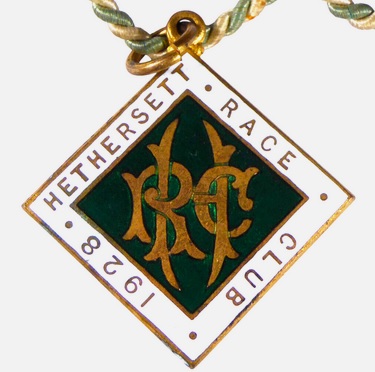
Final meeting: Thursday 4th May 1939
The Norfolk village of Hethersett is located two miles south west of Norwich and first staged racing in the latter part of the 19th century. The inaugural meeting was held on Friday 23rd March 1888 when organised by the Hussars. The locally based 19th and 20th Hussars Regiment enjoyed racing and the meetings continued throughout their time in the area. The course was situated approximately 2 miles from Norwich, close to the village of Hethersett and Hethersett Station. Racing returned to Hethersett in 1904 when the Norwich Hunt took over administrative duties. These meetings continued for ten years until the outbreak of World War I. In 1927 the 120 acres on which the course stood were sold by Mr Ketteringham to Mr R J Read, whose aim was to run the meetings as ‘Hethersett races’. He met his target the next year when the first meeting to be organised by the Hethersett race committee was staged on Thursday 8th March 1928. Meetings continued to be well supported by the locals, and races were always competitive, often with large fields. The final meeting under rules took place on Thursday 4th May 1939, after which the War intervened. However, once the war was over racing did not make an immediate return, the course eventually being used by the Norwich Staghounds for point to point races between 1953 and 1963, and meetings ceasing in 1970.
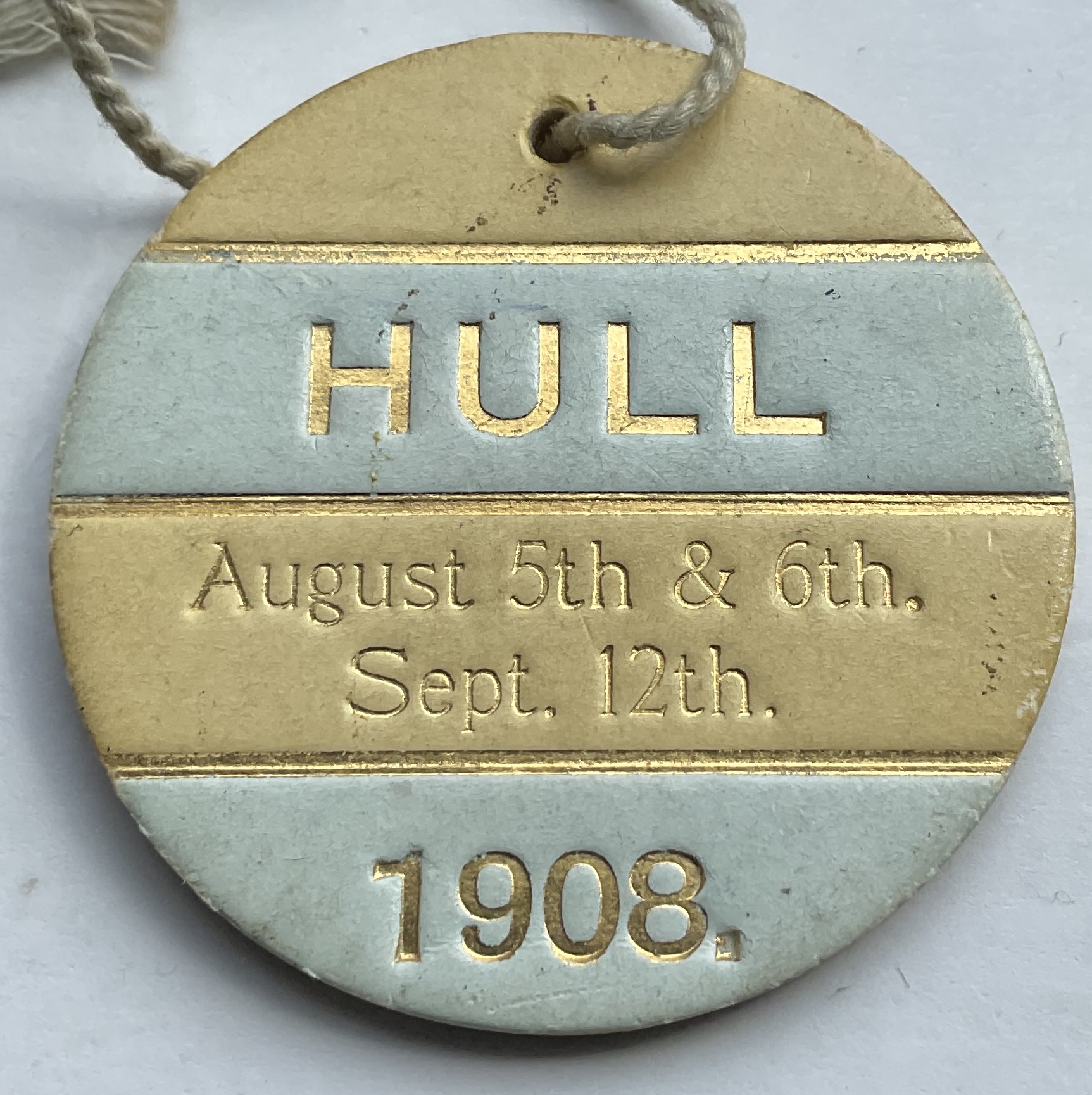
Final meeting: Saturday 11th September 1909
The East Riding of Yorkshire town of Kingston upon Hull, in the Humber estuary, is more commonly known just as Hull and first held races in the middle of the 18th century. Early records show that racing took place on the Anlaby Road course in 1754, and later the Racing Calendar of 1760 recorded a meeting at Hull from the 8th to 10th July 1760.
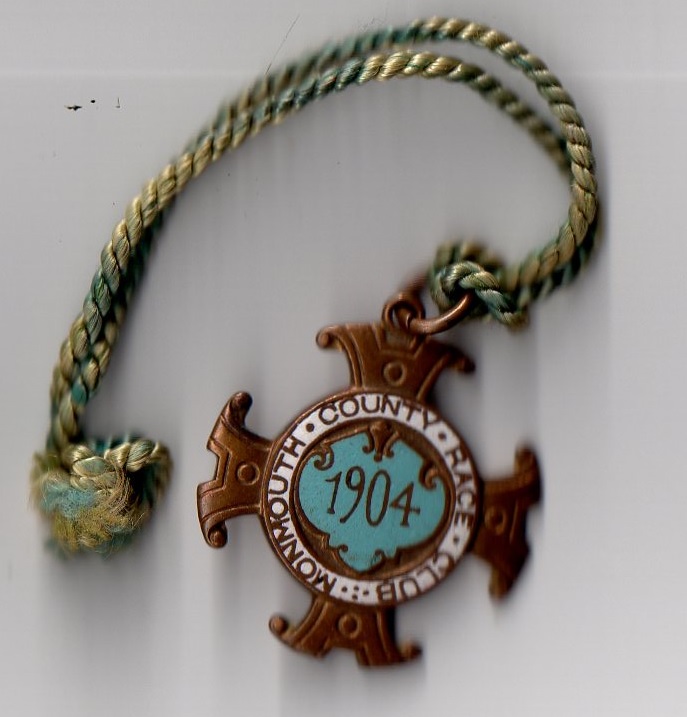
Final meeting: Thursday 4th May 1933
The Welsh market town of Monmouth, within two miles of the English border, is located where the Rivers Wye and Monnow meet. The town is steeped in history, being the site of the Roman fort of Blestium, and after the Norman invasion its famous Castle was built in 1067. The first record of racing taking place in the vicinity of the town was on Thursday 8th September 1730. It took place on Chippenham Meadow, on the banks of the River Wye, when the £30 Plate was won by Mr Middleton’s Infant. Racing ceased in 1777 but returned to the Chippenham course in 1810. In 1836 Charity won a lowly hurdle race at the track and few would have realised that he was a future Grand National winner in the making. Indeed, the first Grand National winner Lottery won a 3 mile steeplechase at Monmouth in 1841, two years after landing the great race. However, it is more than likely that the course on which Lottery was successful was a cross-country steeplechase course rather than the usual racecourse. The final meeting was staged on Thusday 4th May 1933.

Earliest meeting: Thursday 29th November 1894
Final meeting: Thursday 28th December 1905
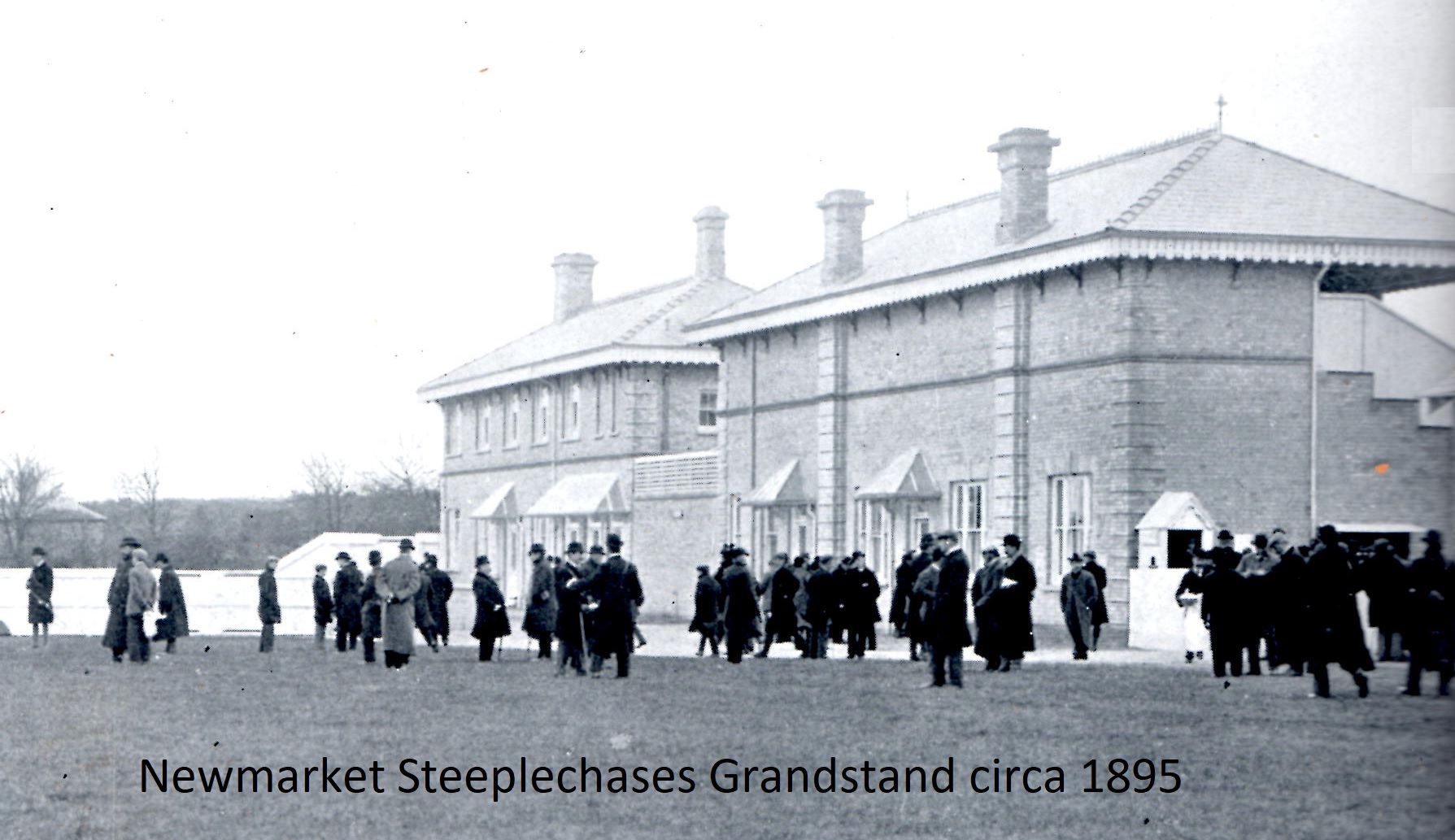
Newmarket in Suffolk remains the home of English racing, but what might not be as well known is that the town once staged steeplechase meetings. The Cheveley Park Estate was developed as a jumping course in 1892 under the direction of Colonel Harry McCalmont when he took ownership of the Estate, but he was dissatisfied with that initial course as trees blocked his view of the races, so he developed a steeplechase course on nearby Links Farm, the first meeting taking place on Thursday 29th November 1894. Meetings billed as ‘Newmarket Hunt races’ had been held up to the 1860s on a course at Moulton, and were revived in March 1879 at a course 5 miles from Newmarket and a mile and a half from Kennet Station, but the re-revival in 1894 was held in Newmarket. By 1895 it had extended to a 2 day meeting and included the Newmarket Grand Military Chase which was later won by Greenhill for Mr Withington in 1897. At that same meeting the Cheveley Cup saw The Rush land prohibitive odds of 1/5 to defeat Sophos and Xylophone. The National Hunt Chase Challenge Cup, over 4 miles and 24 fences, is now contested at the annual Cheltenham Festival in March, but in 1897 it was held at Newmarket, resulting in a win for Nord Quest ridden by Jules Morand. Colonel McCalmont was caught up in War duties from 1899 to 1901 and the meeting did not take place during these years. More bad fortune occured in 1902 when the weather caused the meeting to be cancelled. The Colonel died in December 1902 and with him the chance of permanent steeplechasing ever becoming firmly established at Newmarket. The final meeting took place on Thursday 28th December 1905.


Final meeting: Monday 17th May 1948
The Welsh cathedral city of Newport, on the River Usk, is located in south Wales just 12 miles north east of Cardiff. The earliest recorded two day race meeting in the area was in August 1845 at Caerleon, with meetings continuing until 1854. The 1845 meeting was not worthy of note because the three races on Wednesday only attracted a total of six horses, while the sport on Thursday was even less attractive. The Sporting Magazine of 1846 reported on the second year of meetings held at the Newport Racecourse in Monmouthshire when a one day meeting took place on Tuesday 3rd September. However, the earliest races billed as ‘Newport’ were not held until a two day meeting from Wednesday 15th to Thursday 16th November 1899. By then the course was situated on the banks of the River Usk, close to the M4 near to Caerleon and less than a mile from Caerleon Station. Meetings stopped in 1913 prior to the outbreak of World War I and did not begin again until 1919. The course closed again for World War II but reopened in May 1946 and a year later the Queen Mother’s jockey and celebrated racing author, Dick Francis, rode Wrenbury Sahib at Newport on Saturday 14th June 1947, one week before his wedding. The final meeting took place on Monday 17th May 1948.

Final meeting: Thursday 31st March 1904
The first recorded meeting at the Northamptonshire county town of Northampton took place in 1632 when races were inaugurated by the Corporation of Northampton and held on Harlestone Heath annually each Easter. If that is the case then it was likely they took place on Monday 9th April 1632, although this is only speculation. At these early races the Corporation donated a silver-gilt cup which, at the time, was valued at £16 13s 4d. The next time a meeting was recorded in the town was on Thursday 11th April 1672 when the Northampton Silver Cup was won by Lord Sherard’s horse which defeated Sir W Hazlewood’s selected gelding and Lord Cullen’s horse which fell. A further Michaelmas meeting took place that year on Saturday 14th September 1672. It was not until 1728 that Baily’s Racing Register first provided detailed results from races held at Northampton. The meeting on Saturday 25th September 1728 saw the £15 Selling Plate go to Mr Cole’s Sooty Don, while the £40 Plate was won by Mr Bertie’s Lady Thigh. By 1834 a new period of racing in the town began, the track staging the Northampton Steeplechase, one of the premier chases in the country at this time, which on Friday 4th April 1834 was won by Captain Lamb’s Vivian ridden by the infamous Captain Becher. Five years later, in August 1839 the track was hosting some of the most prestigious Flat races in the calendar, including Her Majesty’s Plate for 100 Guineas. New grandstands were erected in 1844 and the track began to lose its dubious reputation as being a site for public executions. Despite hosting extremely important races, the course was unenclosed and on common ground. This meant that all and sundry could wander where they pleased, making the course a dangerous place for horses, riders and spectators. There were many occasions when horses fell, or were brought down by incidents with spectators, and it concerned the racing authorities. The final two day flat meeting took place on Wednesday 30th and Thursday 31st March 1904 when racing was marred by the fatal accident of one of the spectators. The course remains for all to see, to walk over and to enjoy, but races no longer take place in Northampton.

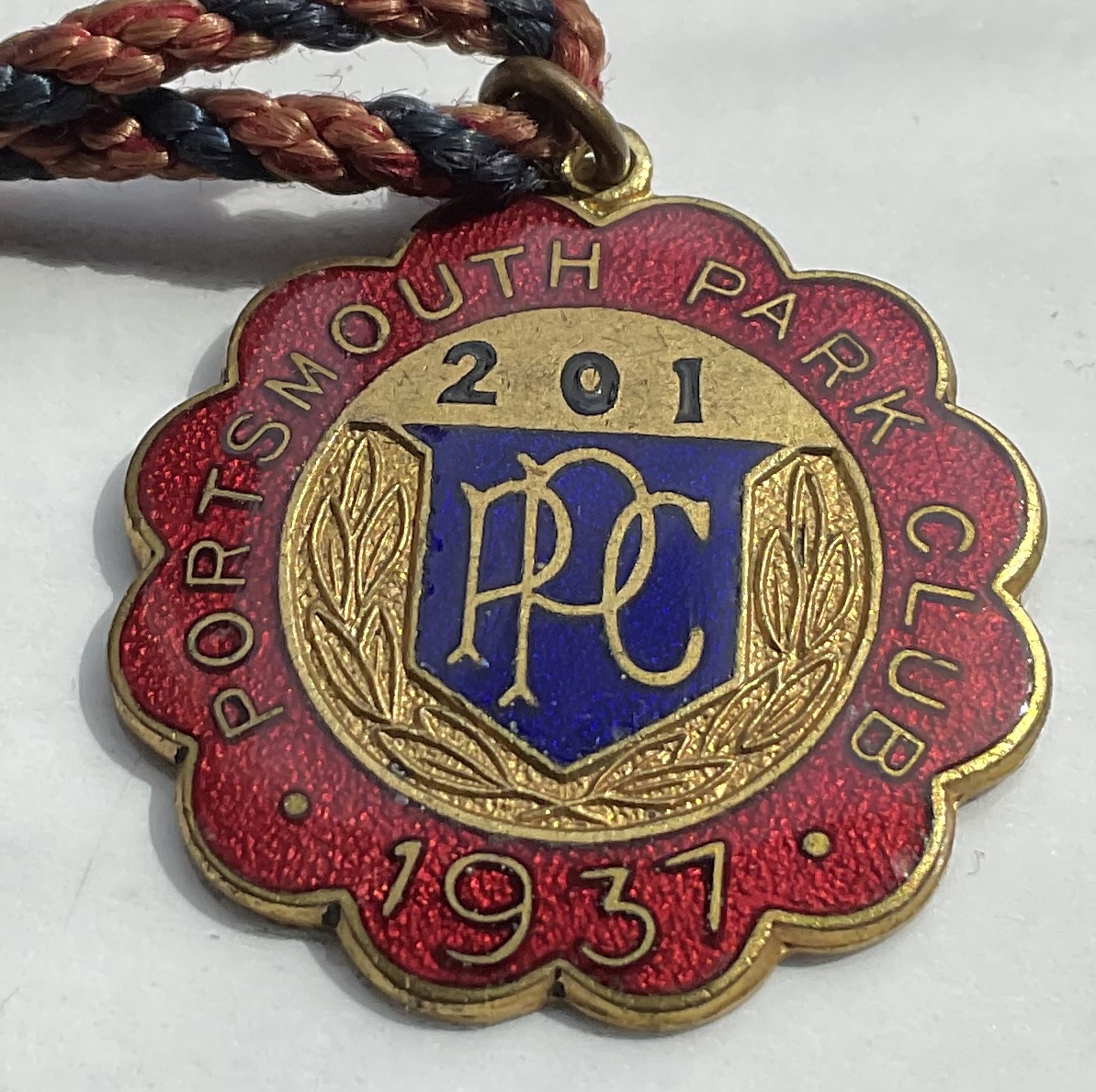
Final meeting: Saturday 17th April 1915
The Hampshire city of Portsmouth is the second largest city in the county, located just 19 miles south east of Southampton. It has been the most significant naval port for centuries, but much later it held its own race meetings. The first two day meeting took place on Tuesday 13th and Wednesday 14th June 1732, but almost a century later a 2-day meeting on Tuesday 14th and Wednesday 15th September 1816 was staged when the local Garrison organised the meeting, although the main Subscription Plate was for non-thoroughbreds.

Final meeting: Thursday 4th September 1930
The picturesque Devon city of Plymouth, at the mouth of the Rivers Plym and Tamar, is located on the south coast just 37 miles from Exeter. The earliest record of racing in the area was at Whitchurch Down when a meeting, billed as ‘Tavistock and Plymouth’ was held on Tuesday 31st July 1810 and proved to be a controversial affair. In the first heat of the four runner all age event Trinculo crossed White Rose forcing him to go the wrong side of a post. The next time races were staged in the vicinity of the city was at Crabtree in 1827, although it is likely these were just one attraction at a festival. A year later the races moved to their final destination at Chelson Meadow, on land enclosed by the Earl of Morley, when known as the ‘Plymouth and Devonport’ meeting. The racecourse was a flat, oval course of 12 furlongs with a straight run-in of just 2 ½ furlongs. In 1833 the meeting was named 'The Plymouth, Devonport and Cornwall races' featuring the Handicap Plate over one mile which saw George Osbaldeston’s Lady Elizabeth beat Land’s End and Coronet. Although meetings continued right up to the start of the War, they decreased in popularity because trainers were loath to travel the long distances to reach the course. A meeting was due to take place on Wednesday 2nd and Thursday 3rd September 1914 but the War caused it to be abandoned. After the War ended racing did return, although meetings seldom attracted large fields and attendances continued to dwindle. The final meeting took place on Thursday 4th September 1930.

Final meeting: Monday 11th March 1940
The Shirley area of Birmingham is in the south east district of the city and in the 18th century was barely more than a hamlet surrounded by beautiful countryside. In the late 19th century it came under the umbrella of Solihull, but in 1894 moved under the jurisdiction of Shirley Parish Council. One of their first actions was to approve the development of a mile and a half racecourse on Shirley Park on Monkspath Street, which was close to the important Stratford Road. The first meeting to be held at the new course was on Monday 1st May 1899, opening with the Henley Selling Hurdle which was won by Kippur. The meeting was a success and the next year the track was allocated four Monday meetings, the first of which was in March. Meetings continued to be well supported, although the quality of racing was not high, but it made up for that with quantity by ensuring that races were competitive. Although the course ceased to race after 1915 for the duration of the War, meetings were staged again in September 1919 and continued beyond the start of the Second World War. The final meeting under rules was held on Monday 11th March 1940, the appetite for trainers running their horses at the course had not diminished because 111 horses contested the six race programme. After the war ended thoroughbred racing did not return, Kirkby Mallory Racecourse Company Ltd taking charge of the course, making it the premier pony racing track. The final pony race meeting was staged on Wednesday 4th November 1953.

Final meeting: Monday 25th March 1940
There was evidence of racing in the seaside town of Torquay, in the County of Devon, as early as 1854 when the inaugural meeting was held at Cary Park, Babbicombe, on Thursday 16th February 1854, but a decade later the races moved from the Furrough Cross site to Petitor supported by special trains from both Exeter and Plymouth. However, the South Devon MP, Sir Lawrence Palk, informed the race committee that 1876 would be the final meeting to be held at the racecourse as he was unhappy with the antisocial behaviour and drunkenness which the races attracted. Having remained at the site for 12 years, they transferred to a course midway between Galmpton and Waddeton. The first meeting, a two-day affair held at the new course was on Thursday 25th and Friday 26th April 1878, but within 8 years the meeting had moved yet again. The Second Lord Haldon, son of Sir Lawrence Palk, was keen for Torquay races to return to the Petitor racecourse. In March 1886 Lord Haldon laid the foundation stone for the permanent grandstand in readiness for the inaugural meeting in Easter 1886. The course subsequently shared its existence with Torquay Golf Club, benefitting from its many facilities, and for one week a year the Race Committee leased the course from the District Council. The final meeting took place on Monday 25th March 1940 when almost 9000 enjoyed a welcome break from worries about the War. Although races ceased for the duration of the War, a bomb destroyed most of the facilities, including the grandstand on Sunday 23rd May 1943. When the War ended it was decided that rebuilding costs were too great and racing transferred to Newton Abbot.

Earliest meeting: Wednesday 21st August 1678
Final meeting: Wednesday 21st February 1849
The first evidence of racing at Wakefeld was in 1678 on the third Wednesday in August. It took place on The Ings near to Law Hill. However, once gentlemen landowners laid claim to The Ings the racecourse was relocated to Outwood, a course of about 2 miles round. It became established and a grandstand was built in 1745 financed by subscriptions from supporters who were given life membership badges, but racing only lasted at The Outwoods until 1794. There was a lull in organised meetings until 1847 when the Wakefield Grand National was launched by the Earl of Strathmore. It was contested over a 4 mile course, consisting of 53 fences, starting at Sandal Castle, but lasted for just 2 more years, with the final meeting on Wednesday 21st February 1849.
The Grandstand
The Grandstand and Stables stood on the highest part of the racecourse, on an area known as Springhills, which was reached via Grandstand Road, either from the Wakefield to Leeds Road, or from the Wakefield to Bradford Turnpike Road. The Grandstand, designed by John Carr, was completed in 1745 and was described at the time as 'the finest in the land'. Such was the high regard Carr's architectural skill was held in that he was commissioned to design, along similar lines, the grandstands for Doncaster, Kelso, Nottingham, Richmond and York racecourses. The Grandstand proved to be an amazing landmark seen for miles around, while the views from within the Stand not only gave racegoers a superb view on race days, but also to the South one could see the City of Wakefield and its Cathedral. The two-storey Grandstand, constructed of rendered red brick, was approximately 70 feet long, 40 feet wide and 35 feet high. On the ground floor there were meeting rooms for use by racing officials, and eating places for the gentry and their guests. The first floor, reached by a staircase, opened onto a large hallway from which there were 7 doorways each topped by Venetian style arched windows which lead to a walkway, while a further staircase allowed access to the roof area. When the racecourse finally closed the Grandstand became a farm dwelling, with numerous families living in it by 1850.
